
Table of contents
Quick summary
- Animated video costs IDR 200,000 each, minimum 25 videos, so a full batch is IDR 5,000,000
- Three formats: explainer video, whiteboard animation, and motion design for feeds
- Script and storyboard are signed off before animation starts, since changes after render cost more
- Each video is exported per placement: 9:16 for reels, 1:1 for the feed, 16:9 for a website hero
- On screen text is judged muted on a phone, because feed views start with the sound off
- Video editing is IDR 100,000 per video, minimum 30; posters IDR 75,000, minimum 60
Three animation formats, and when each one earns its place
An explainer video runs thirty to ninety seconds, carries narration, and is built around one problem and one way out. The format works hardest on an offer page or inside an ad, where a viewer has to understand the thing before messaging anyone.
Whiteboard animation uses the look of a drawing that grows on screen, and its strength is the order it imposes rather than the style. The eye follows the drawing hand, so step by step material such as an insurance claim procedure or a factory production flow is easier to follow to the end.
Motion design is the shortest and cheapest to maintain, driven by type, shape, and numbers rather than narration. Choosing wrong is expensive: whiteboard animation for a six second promo burns the whole frame budget, while motion design for a product that needs cause and effect leaves tidy movement and nothing understood.
How the work runs, and why the script gets locked first
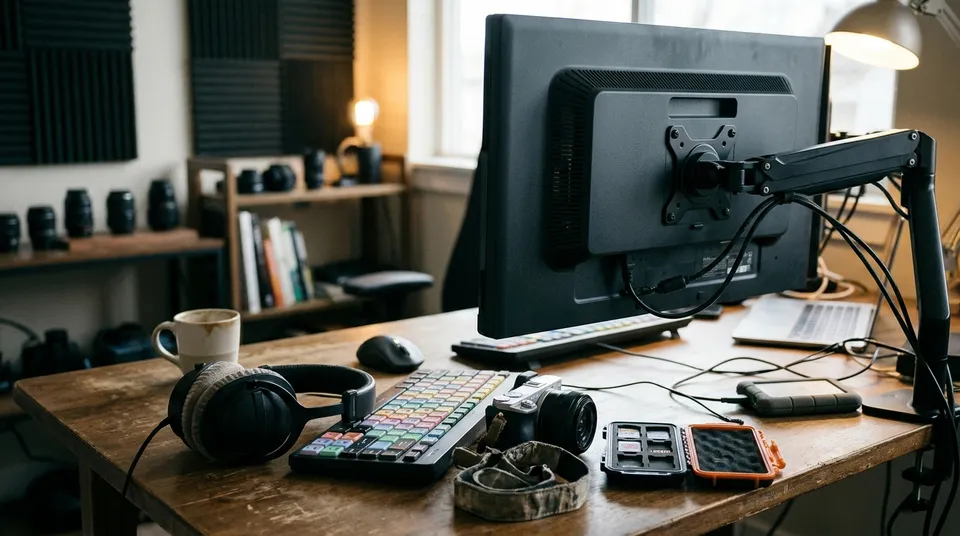
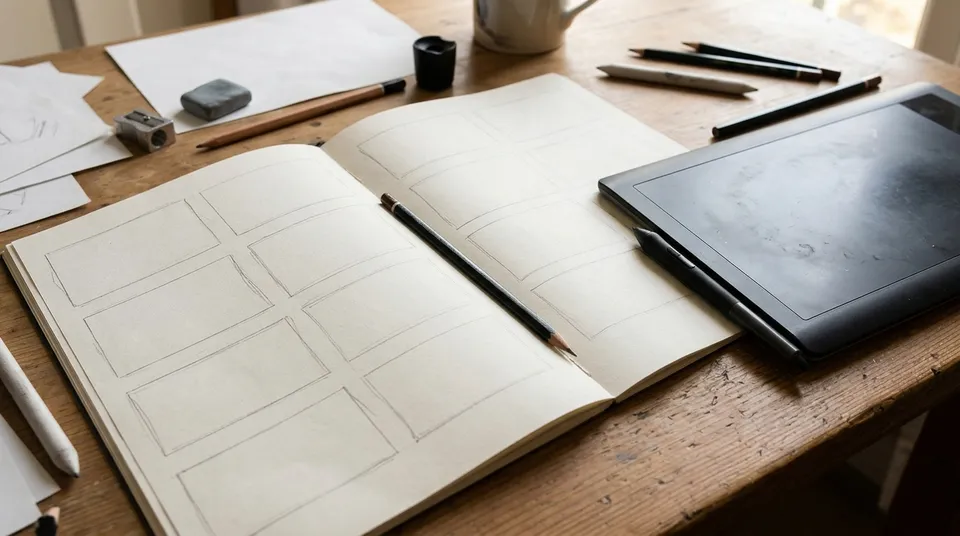
One animated video moves through stages whose order cannot be swapped: a brief, a script, a scene list with storyboard, a style frame that settles colour and type, an animatic that tests timing before any polish, then animation, sound, and an export per placement.
Sign off happens at two points, the script and the animatic, because change is still cheap there. Rewriting one sentence in the script edits a line of text; the same rewrite after animation means re timing every keyframe, recording the voice over again, and rendering everything twice.
On a 25 video order one asset kit is built once and reused: palette, type, logo lockup, lower third, transitions. That kit keeps the unit price at IDR 200,000, because twenty five separate styles are twenty five separate jobs.
The technical specs that decide whether a video plays properly
Placement decides the frame, not taste: 9:16 for reels, stories, and TikTok, 1:1 for the feed, 16:9 for a website hero and YouTube. Exporting once and dropping that file everywhere is why text gets cropped and logos lose half of themselves.
Inside a 9:16 frame sit zones the app interface covers, the top for the account name and the bottom for the caption and buttons, so no readable text belongs in either. Type size is judged on a phone at arm's length, never on a twenty seven inch monitor where everything looks generous.
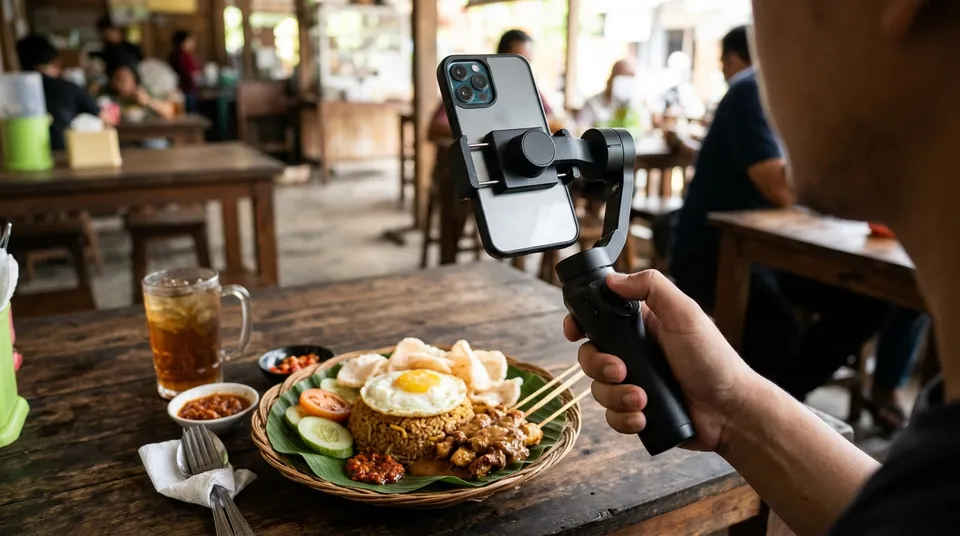
Most feed views begin with the sound off, so the message has to survive as on screen text or a burned in subtitle. The rest is batch discipline: voice over mixed above the music, loudness matched so video seven is not twice as loud as video six, one frame rate at 24 or 30 throughout, and an H.264 mp4 export under each platform's size limit.
- Burn subtitles into the picture instead of trusting automatic captions
- Keep the top and bottom safe zones clear of text, since the app interface sits there
- H.264 mp4, a consistent 24 or 30 frame rate, matched loudness across the batch
The faults we find most often in clients' existing videos
Nearly every video we review is technically fine. The file opens, the animation is smooth, the render is clean. What fails is legibility where the video actually plays: a phone, muted, among dozens of other clips.
The two biggest faults can be confirmed in a minute with no tools: watch it muted on a phone, then watch only the first three seconds. If the message has not landed in both tests, the remaining duration will not rescue it, because the viewer has already scrolled.
- Type that reads as a headline on a monitor and vanishes on a phone at arm's length
- A single 16:9 file pushed into reels, so the text is cropped on both sides
- The first three seconds spent on a logo animation instead of a reason to stop scrolling
Checking your own animated video in ten minutes
This check needs no access to the working files, so it works on a video another vendor produced. Send it to your phone, mute it, hold the phone at arm's length, and play it once without pausing. If colour and movement are all you remember, the message is not there yet.
Next, run an unpublished test upload on the target platform, the only place those covered zones show themselves honestly, and confirm the logo and the call to action survive. Once it is live, the most useful number is how many viewers remain at the three second mark: a sharp drop there blames the opening, not the content.
Metanotech content rates, minimum orders, and the value of one full batch
| Service | Unit price | Minimum order | One full batch |
|---|---|---|---|
| Animated video | IDR 200,000 per video | 25 videos | IDR 5,000,000 |
| Video editing | IDR 100,000 per video | 30 videos | IDR 3,000,000 |
| Poster design | IDR 75,000 per post | 60 posts | IDR 4,500,000 |
| Social media management | IDR 2,500,000 per month | 3 months | IDR 7,500,000 |
| Landing page to host the video | IDR 2,000,000 per year | 1 page | Ready in 3 to 5 working days |
Frequently asked questions
How much does motion graphics production cost at Metanotech?
Animated video is priced at IDR 200,000 each with a minimum order of 25 videos, so a full batch comes to IDR 5,000,000. The unit price holds because one asset kit is reused across the batch, not because the animation is cut shorter.
What is the difference between explainer video, whiteboard animation, and motion design?
An explainer video is narrated and runs 30 to 90 seconds to lay out one problem and one way out. Whiteboard animation uses a drawing that grows on screen and suits step by step material such as procedures or requirements. Motion design is the shortest, driven by type and numbers, and belongs in feeds and promos.
Why is there a 25 video minimum order?
The 25 video minimum exists because the heavy cost of animation lands at the start, when the style, palette, type, logo lockup, and transition set are settled. A kit built once gets reused, so videos two through twenty five move faster than the first.
Which frame ratio and duration suit reels, the feed, and a website?
A 9:16 frame serves reels, stories, and TikTok, 1:1 serves the feed, and 16:9 serves a website hero plus YouTube. Duration follows the format: 6 to 15 seconds for motion design in a feed, 30 to 90 seconds for an explainer on an offer page.
How do I check an animated video before it goes live?
The fastest check happens on a phone: mute it, hold it at arm's length, play it once without pausing, then note what you still remember. Follow that with an unpublished test upload to see whether the app interface covers the logo or the call to action.
Can the animated video sit on our own website?
Animated video can run as a 16:9 hero or a product explainer on a site we build, from IDR 2,000,000 per year for a landing page ready in 3 to 5 working days, or IDR 3,000,000 per year for a company profile site of up to 50 pages. Every website package covers hosting, SSL, the server, a WhatsApp group, and unlimited revisions for a year, while the domain is bought separately and stays in your name.