Social Media Management Services for Companies and Brands
Corporate social media management runs brand accounts starting from strategy rather than from posts: the role of each platform, a brand voice guide, content pillars, a calendar and an approval flow that follows your internal structure. It suits manufacturers, distributors, B2B companies and groups with several brands, where each piece of content passes through more than one person before it goes live. Metanotech builds the system, runs it with your team and reports results in a form management can read quickly.
Quick facts
- Designed for manufacturers, distributors, B2B companies and groups that run several brands
- Starts with strategy and a written brand voice guide, not with posting
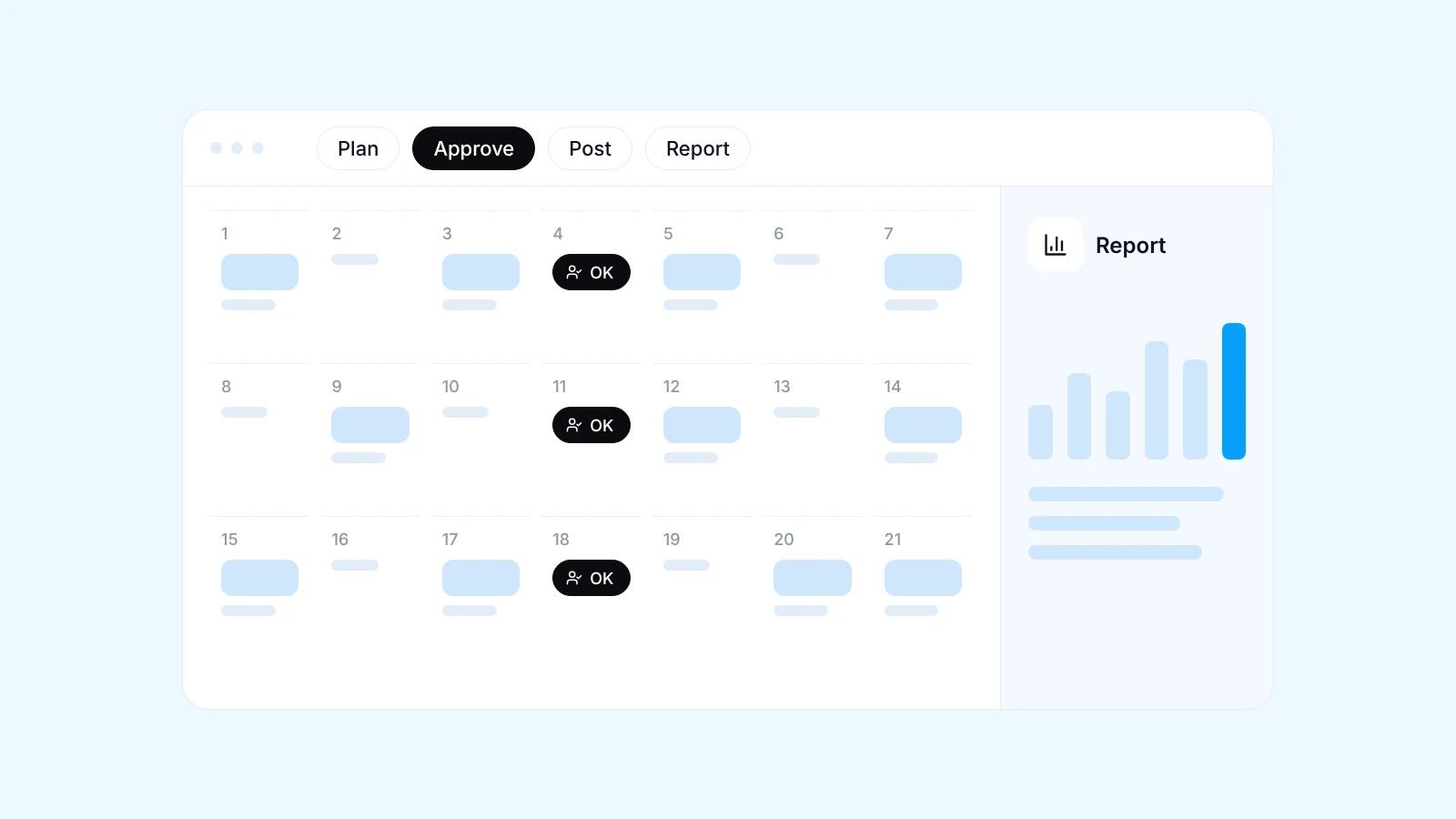
- The content calendar is approved each period through an approval flow agreed at the start
- Organic content and ads are planned together, so messages and timing do not clash
- Management reports tie back to business goals, not just likes and followers
- Works alongside your in-house marketing team
How it differs from day-to-day account management
Day-to-day social media management is about execution: scheduling posts, writing captions, answering comments and reading the account numbers each month. For a business where one owner decides everything, that is often enough. Companies are in a different position. A single post can involve marketing, a technical team checking product specifications, sales wanting their promotion to run, and a manager giving final approval.
Corporate social media management adds a governance layer on top of that execution: a written strategy, language and visual rules, clear roles, an approval schedule and reports that management actually reads. Without it, a company account easily stalls while waiting for approvals, or looks inconsistent from one brand to the next.
Strategy per platform and per audience
Companies rarely speak to just one group. A raw material producer, for example, has buyers in procurement, technical users, distributors and job candidates. Strategy starts by mapping who needs to be reached, which platforms they use and what they need to know from you.
Each platform then gets a clear role. LinkedIn often carries company news, credibility and recruitment, Instagram product visuals and workplace culture, TikTok and YouTube Shorts short education that reaches new people, and YouTube longer demos. That role decides the type of content and how its success is measured.
- An audience map: buyers, users, distributors and job candidates
- A role and a goal for every platform in use
- Success measures that match each platform's goal
Brand voice guide and content pillars
A brand voice guide is a short document explaining how your brand speaks: its tone, the words it uses and avoids, how products and specifications are named, how complaints in the comments are handled, and visual rules for the logo, colours, fonts and photo style. With it, anyone making content produces the same voice, including when people change on your team or on our team of social media specialists.
Content pillars are standing themes that keep an account balanced, for example products and their applications, production and quality control, industry education, company news and exhibitions, and workplace culture. In a group with several brands, each brand has its own guide and pillars, while corporate rules such as how the company name is written and how media enquiries are handled are shared.
Content calendar and internal approval flow
The content calendar is planned per period, with one row for each post: date, platform, pillar, key message, format, assets, call to action and the name of the approver. It goes out well ahead of the posting dates, so every reviewer has enough time.
The approval flow is written down from the start: who checks what, and how long each step may take. When an approval runs late, that slot is filled with backup content approved earlier, so the account does not fall silent just because one reviewer is busy.
- Content and caption drafts prepared to the calendar
- Marketing reviews the content and language
- The technical team checks product accuracy where needed
- Final approval by a manager or the brand owner
- The post is scheduled and logged in the calendar
Coordination with ads, the website and sales
Organic content and ads are best planned in one calendar. Posts that prove engaging can become ad creative on Meta or TikTok, and campaigns line up with product launches, exhibitions or distributor promotions. Links from each post point to the relevant website page with UTM parameters, the source tags added to a link, so visits from social media show up in reports.
Enquiries arriving by direct message are passed to the right person, such as the regional salesperson or the nearest distributor, with a short note on the product asked about. These routing rules are agreed with your sales team, so prospects are not kept waiting or asked the same thing twice.
Reports that management can actually read
Management rarely has time for dozens of charts. The report opens with a one-page summary: what went live, which content worked and why, how many enquiries came in and were passed on, issues to watch such as complaints or negative comments, and the plan for the next period. Detailed data per platform is attached for anyone who wants to dig deeper.
The numbers reported follow each platform's goal: reach for awareness, saves and shares for education, link clicks for website visits, and messages for leads. The reporting schedule is agreed at the start, for example a monthly report and a quarterly strategy review.
How Metanotech starts, and your team's role
Work starts with a free consultation on WhatsApp, then we review your existing accounts, brand materials and how approvals work in your company. From there we draft the strategy, brand voice guide, content pillars and approval flow, all signed off before the first calendar is made.
On your side, we need one person in charge who coordinates the internal reviewers, access to the social accounts, accurate product information and commitment to the approval deadlines. If product photos or videos do not exist yet, they can be produced through our content creation service. Metanotech's office is in Gunung Putri, Bogor Regency, and clients in other cities are served remotely.
| Stage | Handled by Metanotech | Kept by your team |
|---|---|---|
| Strategy and brand voice | Drafting the audience map, platform roles, brand voice guide and content pillars | Giving input and approving the final documents |
| Content calendar | Planning the posts for each period | Sharing company agendas, launches and exhibitions |
| Production and captions | Creating designs, videos and captions to the guide | Providing product information and access for shoots |
| Approval | Sending drafts and tracking deadlines | Checking accuracy and giving final approval |
| Posting and ads | Scheduling posts and aligning them with ad campaigns | Following up the enquiries passed to sales |
| Reporting | Preparing the summary and per-platform data | Discussing results and setting the next priorities |
Frequently asked questions
How does corporate social media management differ from regular social media management?
Regular social media management focuses on daily execution: the posting schedule, captions, comment replies and account reports. Corporate social media management adds a written strategy, a brand voice guide, content pillars, an internal approval flow, coordination with ads and sales, and reports for management. It is built for organisations where every piece of content is checked by more than one person.
What if every post needs approval from several people?
The approval flow is set out from the start: who reviews the content, who checks product accuracy, who gives final approval, and the deadline for each step. The calendar goes out well before the posting dates so reviewers have enough time. If an approval runs late, the slot is filled with backup content that was already approved, so the account stays active.
Can you manage several brands or accounts at once?
Yes. Each brand gets its own brand voice guide, content pillars and calendar, while corporate rules such as how the company name is written and how media enquiries are handled are shared. Reports for management can be combined into one summary, with details per brand and per platform attached.
Which platforms suit a B2B company?
It depends on where your buyers and decision makers spend their time. LinkedIn often carries company news, credibility and recruitment, Instagram product visuals and workplace culture, and YouTube and TikTok education and product demos. You do not need every platform, and a few well-run platforms are worth more than many neglected ones.
Can you work with our in-house marketing team?
Yes, and the split of roles is agreed at the start. A common split: Metanotech handles strategy, the calendar, production and reporting, while your team holds product knowledge, company agendas and final approval. The split can be adjusted, for example your team keeps answering messages while we focus on planning and producing content.
How much does corporate social media management cost?
The cost of corporate social media management depends on the scope, such as the number of brands and platforms, the content volume and whether photo or video production is needed. Tell us what you need on WhatsApp, the consultation is free, and we will send a proposal that fits that scope.
Related services
Start a project
Tell us the problem.We'll build the fix.
Free consultation on WhatsApp. Tell us about your business, what you want to build, and what is getting in the way.